
"coffee growth Asia"
1000 article(s) found

General situation of Coffee Bean Brands in Ethiopian Market what kind of coffee beans to buy in Ethiopia
For more information on coffee beans, please follow Coffee Workshop (Wechat official account cafe_style) Ethiopia is a landlocked country in northeast Africa located in the Horn of Africa, bordered by Eritrea (Eritrea) to the north, Djibouti (Djibouti) and Somalia to the east, Sudan and South Sudan to the west, and Kenya to the south. Ethiopia has a population of over 90 million.

Three brands of Hainan coffee: Xinglong Coffee / Hainan Qiongzhong Coffee / Fushan Coffee _ Hainan Coffee recommendation
Professional coffee knowledge exchange more coffee bean information please follow the coffee workshop (Wechat official account cafe_style) Hainan is China's only tropical island, is also one of the few places in China that can produce coffee, and it is also the first place to introduce coffee in China. In Hainan, you can taste the wonderful Hainan coffee and the unique Hainan coffee culture. The first stop of ●: Xinglong Coffee
The planting and Distribution of Coffee trees in the World
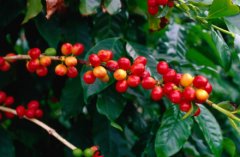
Coffee is distributed near the equator, tropical and subtropical regions. It is widely distributed in South America, Central America, West Indies, Asia, Africa, Arabia, South Pacific and Oceania. Brazil leads the world in coffee production, accounting for about 30 per cent, followed by Colombia, accounting for about 10 per cent. Taking Central and South America as the center accounts for 60%, followed by Africa and Arabia accounting for about 30%, and the remaining 10%

The historical origin and spread of coffee
Coffee into Asia the Arabs failed to spread coffee in Asia, but the Dutch did! In the process of colonization, they grew coffee in Malaba, India, and brought it to Batavia in what is now Java, Indonesia, in 1699. The Dutch colonies once became the main supplier of coffee in Europe. At present, Indonesia is the fourth largest coffee export in the world.

The historical origin and spread of coffee
Coffee into Asia the Arabs failed to spread coffee in Asia, but the Dutch did! In the process of colonization, they grew coffee in Malaba, India, and brought it to Batavia in what is now Java, Indonesia, in 1699. The Dutch colonies once became the main supplier of coffee in Europe. At present, Indonesia is the fourth largest coffee export in the world.

The basic knowledge of Coffee beans the allusions of male and female beans
Many friends who came back from Southeast Asia talked about coffee and talked about the vocabulary of public beans and mother beans. After looking up the information, Kirin found that it was what we call flat beans and round beans (Pea Berry and Flat Bean). Secondly, you can also learn about the part of beans divided by the green circle-- Pea Berry and Flat Bean. Through the usual understanding, we must know.

Coffee encyclopedia on the origin and growth of coffee beans
Coffee beans are developed in tropical or subtropical agricultural gardens with the equator as the center, called coffee belts, and travel to Japan with ships. When the brown coffee beans are presented in front of you now, in fact, it has been divided by the phosphorus category by the process and the hands of many people. Coffee is widely distributed in Naaman, Central America, West Indies, Asia, Africa, Arabia and Nancheng.

Introduction to the varieties of mild taste Nicaraguan coffee beans produced by grinding scale manor
Nicaragua is one of the major coffee-producing countries, producing high-quality coffee. Even coffee from the Antigua Mountains of Guatemala, which is famous in Asia, imports raw beans from Nicaragua. Although Nicaraguan coffee is not famous in Asia, Nicaragua coffee is already famous all over the world (Starbucks has many cooperative coffee farmers in Nepal), while several coffee-producing countries in Central America

High-quality coffee beans common sense male beans and mother beans allusions
Many friends who came back from Southeast Asia talked about coffee and talked about the vocabulary of public beans and mother beans. After looking up the information, Kirin found that it was what we call flat beans and round beans (Pea Berry and Flat Bean). Secondly, you can also learn about the part of beans divided by the green circle-- Pea Berry and Flat Bean. Through the usual understanding, we must know.

Basic knowledge of boutique coffee the allusions of public beans and mother beans
Many friends who came back from Southeast Asia talked about coffee and talked about the vocabulary of public beans and mother beans. After looking up the information, Kirin found that it was what we call flat beans and round beans (Pea Berry and Flat Bean). Secondly, you can also learn about the part of beans divided by the green circle-- Pea Berry and Flat Bean. Through the usual understanding, we must know.

The quietly growing coffee industry in Southeast Asia Yunnan small-grain coffee is the favorite of big international brands.
Professional coffee knowledge exchange more coffee bean information Please pay attention to the coffee workshop (Wechat official account cafe_style) We have always thought that the world coffee producing area should be mainly in Central and South America. Asians are slow to ripen coffee, and the main consumption is tea culture. Once upon a time Vietnam was the second largest producer in the world, while Yunnan, China, was also eager to catch up, and its quality
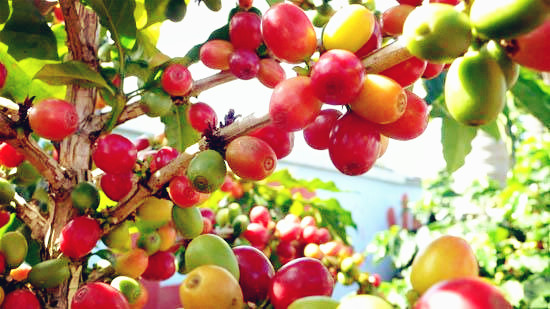
Asia China Fine Coffee Bean Origin Indonesia Bali Coffee Fine
China's coffee-producing areas are mainly in Hainan, Yunnan, Guangdong and Taiwan. Hainan Island north, south of Yunnan Province, located between 15 degrees north latitude to the Tropic of Cancer, its coffee is strong but not bitter, fragrant but not strong, very unique. And with a little fruit flavor, coffee is the top grade, international praise. Taiwan is located in the subtropical zone, mountainous territory, and there is a clear rainy season, coffee is not bad

The planting temperature of coffee tree is between 15 degrees and 25 degrees.
The origin of the coffee tree is Ethiopia in Africa. In botany, coffee trees belong to the evergreen trees of the subgenus Rubiaceae, and coffee beans, commonly known as coffee beans, are actually the seeds of the fruit of coffee trees. They are called coffee beans only because they are shaped like beans. Climate is the decisive factor for coffee cultivation. Coffee trees are only suitable for growing in the tropics or subtropics, so latitude 25 degrees south and north.

Where is the coffee from Papua New Guinea? introduction to the flavor of Papua New Guinea coffee.
Professional coffee knowledge exchange more coffee bean information please follow the coffee workshop (Wechat official account cafe_style) front street-when introducing coffee to Papua New Guinea, the most frequently introduced beans are basically from Asia, Africa, Central and South America. People often mislead people into thinking that these three continents are the only coffee producers in the world. In fact, Oceania also has a place in more than 70 coffee-producing countries.

What is the quality of Yunnan coffee beans? 2018 Yunnan coffee bean quotation _ Yunnan coffee bean brand recommendation
Professional coffee knowledge exchange more coffee bean information please follow the coffee workshop (Wechat official account cafe_style) near the equator in Latin America, Africa and the Asia-Pacific region, the distribution of the world's best quality coffee, so, is there any in China? Yes! From the map, we can see that there are not many places suitable for coffee growth in China. Yunnan Pu'er is a ● Yunnan Pu'er average.

Characteristics of Coffee beans in Latin America Flavor description of planting area texture treatment Grinding scale
Characteristics of Latin American coffee beans Flavor description of the growing area the method of grinding and calibrating the advantaged tropical rain forest environment in some parts of Bolivia provides excellent natural conditions for the growth of organic coffee. The aroma of Bolivian coffee is rich and unique, whether it is the aroma of ground beans or the aroma of coffee, similar to the mixture of flower and fruit aroma.

OATLY Coffee Master Oat Milk develops Oat Milk Why should OATLY own more than 10, 000 cafes
On March 9, OATLY, the world's largest Swedish oatmeal brand, released the latest news: plans to build a new factory! According to the official website of oatmeal brand OATLY, the first factory will be built in the UK. The newly established factory will become one of the largest plant-based dairy factories in the world, with an annual production capacity of 300 million litres of oatmeal, which could grow to 4. 5 percent, according to the snack generation.

Coffee belt coffee trees grow at the center of the equator
Coffee trees grow in tropical or subtropical agricultural gardens centered around the equator and called coffee belts. Most of the coffee production is between the Tropic of Cancer, 25 degrees north of the tropical or subtropical equator and 30 degrees south of the equator. An area with an annual average temperature of 16-25 degrees Celsius, no Frosts Descent and rainfall of 1600-2000 mm. At present, coffee is mainly produced by seven countries.

Introduction of coffee farm in Ethiopia introduction of Ted Manor in Sidamo
From a historical point of view, coffee is closely related to the history and religious culture of Ethiopia. In ancient times, Ethiopia was called Abyssinia and Axum, which was ruled by the Solomon dynasty. According to literature, the Hamitic people of the Mitt nationality migrated from Asia minor to present-day Ethiopia, and the merchants of Semitic migrated from about seven BC.

The basic knowledge of high-quality coffee beans allusions of male and female beans
Many friends who came back from Southeast Asia talked about coffee and talked about the vocabulary of public beans and mother beans. After looking up the information, Kirin found that it was what we call flat beans and round beans (Pea Berry and Flat Bean). Secondly, you can also learn about the part of beans divided by the green circle-- Pea Berry and Flat Bean. Through the usual understanding, we must know.